Hardwood, tile, or LVT for your kitchen floor — which is really the best choice?
Kitchen Flooring Guide · Dallas–Fort Worth
Hardwood, tile, or LVT for your kitchen floor — which is really the best choice?
Walk into any Dallas kitchen remodel conversation and three options come up almost every time: engineered hardwood, tile, and luxury vinyl tile (LVT). All three can look stunning. All three have real strengths — and real weaknesses that showroom photos won’t tell you about. After supplying floors to DFW designers and builders for decades, here’s our honest take.
At a glance — three-way comparison
The case for engineered hardwood
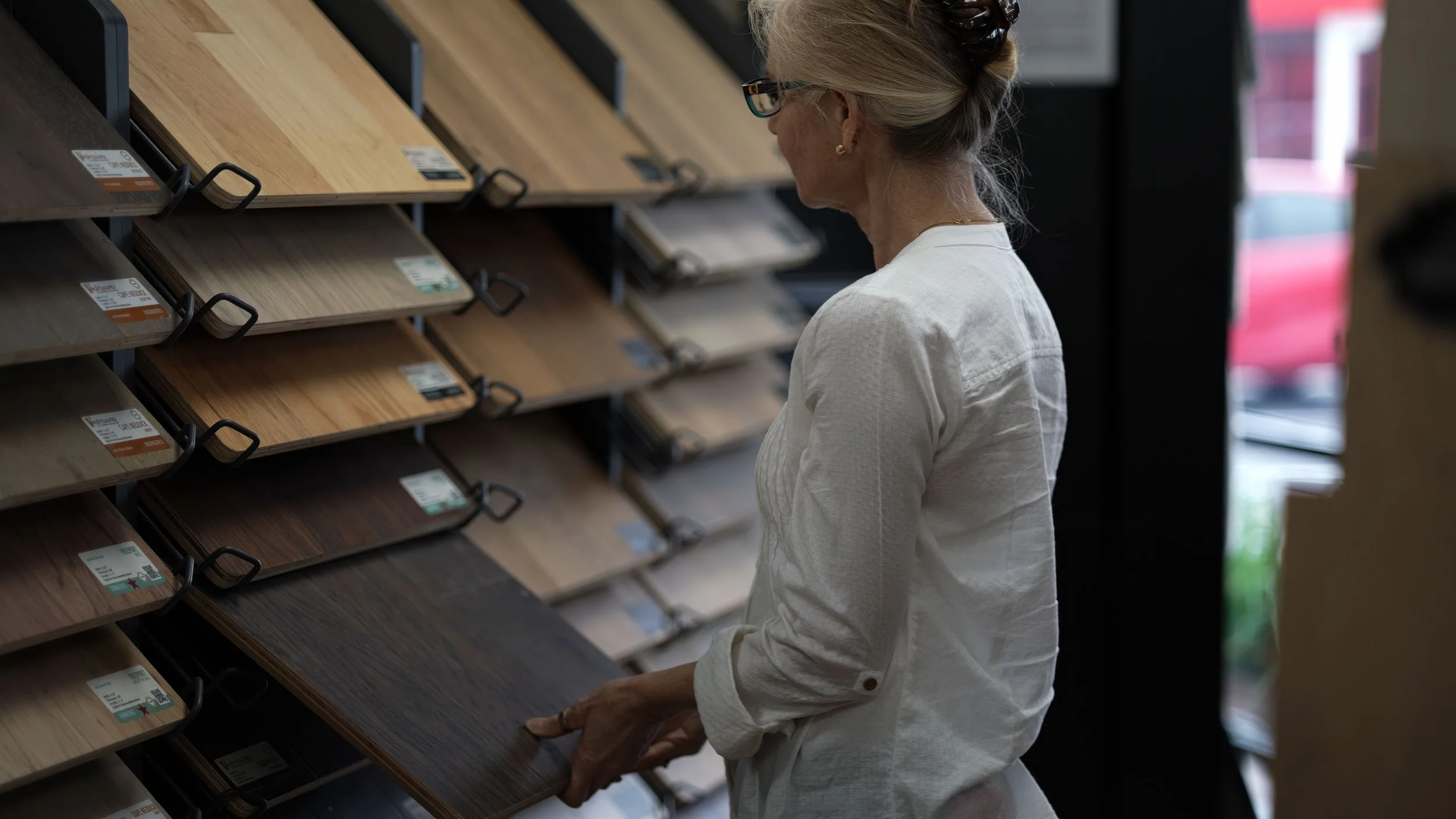
Blackstone carries an intentionally curated lineup of engineered hardwood — no solid wood. That’s a deliberate choice. In Dallas, where slab foundations shift with the clay soil and HVAC systems cycle humidity all year, engineered construction simply performs better. A real-wood veneer over a dimensionally stable core gives you the warmth and character of hardwood without the expansion and contraction risk of solid planks.
The brands we carry
Our engineered hardwood lineup includes some of the most respected names in the category: Duchateau Indusparquet Metropolitan Hardwood Portercraft Riva Spain Triangulo Villagio
From Duchateau’s old-world European aesthetic and hard-wax oil finishes to Indusparquet’s exotic Brazilian species and Riva Spain’s FSC-certified European White Oak over a marine-grade core — there’s a hardwood in this lineup for every design direction.
“We made the call to carry only engineered hardwood years ago. When a designer specs one of our floors over a Dallas slab, we want them to feel confident it’s going to perform — not just look beautiful on install day.”
Engineered hardwood pros
- Real wood look, feel, and warmth
- Can be refinished 2–4 times over its lifespan
- Flows seamlessly into adjacent rooms
- Strong resale appeal — buyers notice and respond
- Stable over Dallas slabs when properly installed
- Wide range of species, widths, and finishes
Engineered hardwood cons
- Standing water is still the enemy — clean spills promptly
- Not ideal for slabs with confirmed moisture problems
- Can fade near sunny windows without UV-protective finish
- Higher upfront cost than LVT
The case for tile
Tile earns its place. It’s virtually indestructible against water, indifferent to humidity, and in a Texas summer that cool-underfoot feeling can be genuinely welcome. For clients with young children, large dogs, or kitchens that open directly to pools or outdoor spaces, tile remains a strong recommendation.
Large-format tile has changed everything
The era of 12×12 beige ceramic is behind us. Today’s 24×24 and 48×24 porcelain slabs — many convincingly replicating marble, concrete, or even wood grain — give kitchens an elevated, contemporary look. Fewer grout lines mean easier cleaning and a more seamless visual field.
That said, grout color strategy matters enormously. Lighter grout in a busy kitchen is a maintenance commitment; darker grout can feel heavy in a small space. Make that call early with your designer — it’s harder to fix later.
Tile pros
- Best-in-class water and humidity resistance
- Ideal over radiant heat systems
- Works well on below-grade or moisture-prone slabs
- Enormous aesthetic range — size, color, texture, pattern
- Cooler underfoot in summer months
Tile cons
- Hard and cold — fatiguing for long time on your feet
- Grout stains and requires periodic sealing
- Cracked or chipped tile is hard to match years later
- Highest installed cost of the three options
- Transitions to adjacent hardwood need careful planning
The case for LVT
Luxury vinyl tile has had a reputation problem it no longer deserves. A generation ago, vinyl meant cheap and temporary. Today’s LVT — particularly at the commercial and trade-grade level — is a seriously considered design material. It’s 100% waterproof, dimensionally stable, comfortable underfoot, and available in formats that convincingly replicate stone, wood, and concrete.
Where LVT genuinely wins
For rental properties, vacation homes, high-traffic commercial kitchens, or any project where budget constraints are real and performance requirements are high, LVT is hard to beat. It installs faster than any other option, can go over almost any existing subfloor in good condition, and individual planks or tiles can be replaced if damaged — something tile absolutely cannot offer.
The honest trade-off
LVT doesn’t have the same resale cachet as real wood, and premium buyers in Dallas luxury markets will notice the difference. It also can’t be refinished — once the wear layer is gone, it’s gone. For primary residences where long-term value matters, engineered hardwood is still our first recommendation. But for the right project, LVT is genuinely the smart choice, not a compromise.
LVT pros
- Fully waterproof — no moisture concerns whatsoever
- Lowest installed cost of the three
- Comfortable and quieter underfoot than tile
- Individual planks replaceable if damaged
- Goes over most existing subfloors
- Excellent for rental and commercial applications
LVT cons
- Cannot be refinished — wear layer is the lifespan
- Not equal to hardwood for resale value perception
- Lower-end products can look and feel thin underfoot
- Heat from direct sun can cause expansion in some products
What Dallas’s climate means for your decision
DFW’s clay soil shifts seasonally — foundations move, and floors feel it. Tile installed by an experienced setter over a properly prepared slab handles this well; tile installed over a moving slab without the right substrate prep will crack. Engineered hardwood handles minor subfloor movement more forgivingly than tile. LVT, with its floating or glue-down installation, is generally the most tolerant of all three.
On humidity: Dallas summers push 90%+ during storm season and drop sharply in winter when heat runs constantly. Engineered construction handles those swings far better than solid wood would — which is exactly why Blackstone doesn’t carry solid hardwood. LVT is entirely indifferent to humidity. Tile is as well, though grout can absorb moisture over time without proper sealing.
The bottom line — which floor for which kitchen
For most Dallas kitchen remodels, engineered hardwood is our first recommendation — the warmth, resale appeal, and design range of our lineup (from Triangulo’s Brazilian exotics to Villagio’s European-inspired collections) is hard to match.
But we’ll point you toward tile or LVT the moment the project calls for it. Our job isn’t to sell you one product — it’s to help your client live with a floor they love five years from now. That’s why we stock all three, and it’s why we work trade-only. Designers and builders who work with us get honest guidance, not showroom upselling.
Working on a kitchen project in DFW?
Blackstone Carpets & Flooring serves interior designers and contractors across Dallas–Fort Worth
with trade pricing and a curated selection from the industry’s best brands.